How to Clean Out a Flooded Basement in Cleveland: Safety First
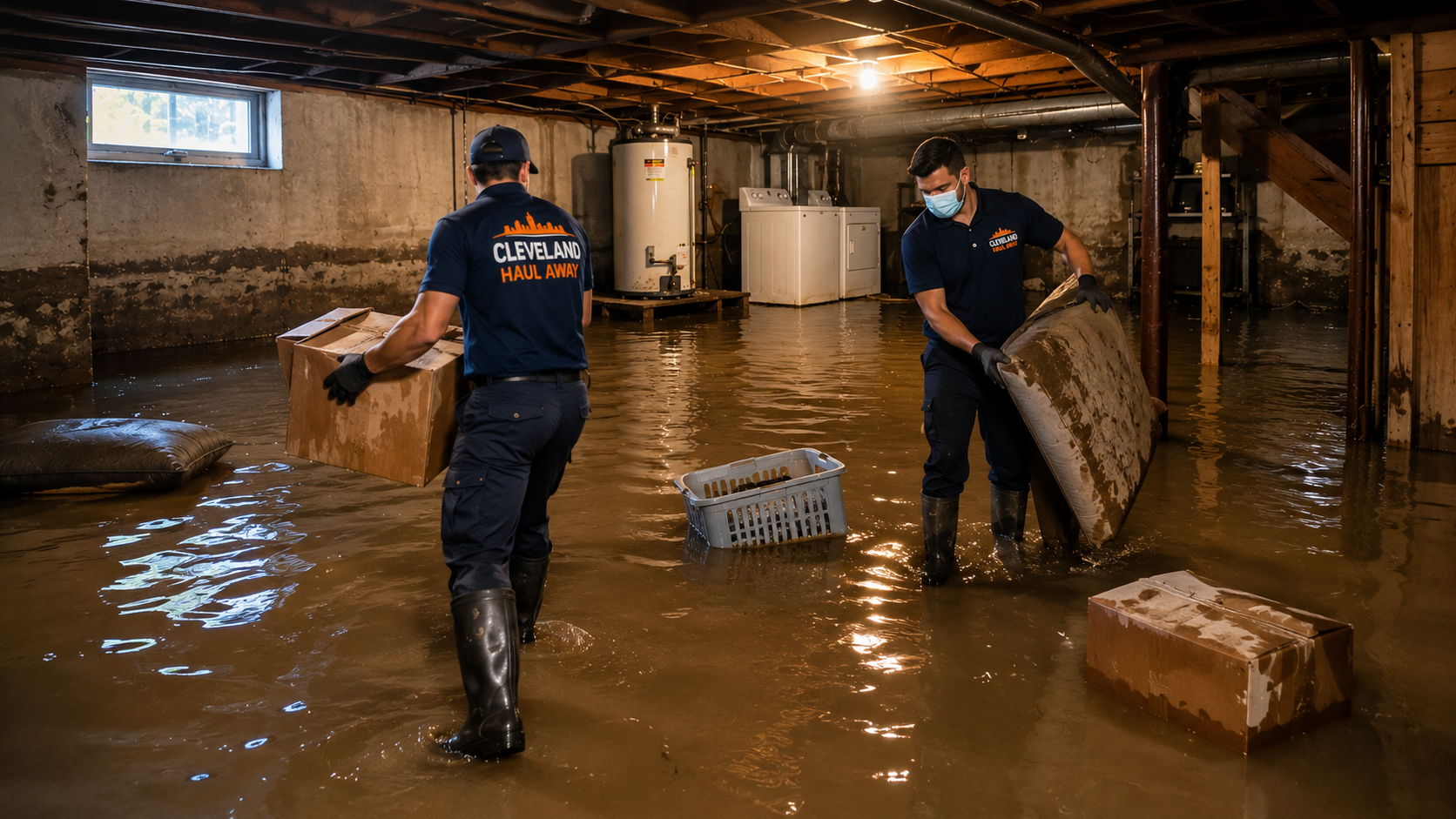
Cleaning out a flooded basement safely in Cleveland means shutting off power at the main breaker first, identifying the water type before entering, documenting damage for insurance, extracting standing water, and hauling out any soaked porous materials within 24 to 48 hours to prevent mold. Full basement cleanouts in Cleveland typically run $400 to $5,000 depending on damage, and same-day haul-away is usually available once the space is safe to enter.
Do not enter standing basement water until the main breaker is off. Electricity in flooded water is the leading cause of injury during home flood response. If the breaker panel is in the basement itself and you cannot reach it safely, call an electrician or your utility to shut power at the meter.
In this guide
- Why Cleveland basements flood
- First 24 hours: safety checks
- Identify the water type
- Document damage for insurance
- Extract standing water
- What can be saved vs what must go
- Haul out damaged contents
- Dry, dehumidify, and prevent mold
- Cost of flooded basement cleanout
- When to call a professional
- Frequently asked questions
Basement flooding is one of the most common home emergencies in Cleveland. Older neighborhoods have plumbing that dates back decades, spring thaws stress storm drains every year, and heavy summer rain events regularly overwhelm sewer capacity in parts of Cuyahoga County. This guide walks through the safe order of operations for cleaning out a flooded basement, what to save versus what to toss, and where a haul-away service fits into the overall recovery.
Why Cleveland Basements Flood
Most Cleveland basement floods come down to one of four causes, and knowing which one you're dealing with shapes the response. Groundwater seepage during heavy rain or snowmelt is the most common. Sewer or storm drain backups happen when city lines overflow into the lowest connected drain, which is often a basement floor drain. Interior plumbing failures like a burst pipe, water heater rupture, or washing machine hose failure can flood a basement quickly even in dry weather. Sump pump failures during a storm are the fourth common cause, especially during power outages when a backup battery or generator is not in place.
First 24 Hours: Safety Checks Before You Do Anything
Before touching water, moving items, or even walking down the basement stairs, three safety checks come first. Skipping any of them turns a manageable cleanup into an emergency room visit.
- Cut power at the main breaker. Standing water and live electrical circuits are a shock hazard, even if the outlets themselves are above the water line. If the breaker panel is in the flooded basement and you cannot reach it dry, call an electrician or your utility to shut power at the meter.
- Shut off the gas. If a water heater, furnace, or gas dryer is in the basement, close the gas shutoff valve at the meter. Submerged pilot lights and gas connections carry a combustion risk during recovery.
- Check for structural damage. Sagging ceilings, buckled floors, or cracked foundation walls mean the space is not safe to enter. Wait for a professional inspection before going in.
The water is above ankle depth and you cannot confirm power is off, or you smell gas, or the flooding involves visible sewage. In any of those cases, stay out and call a professional. The cleanup can wait a few hours. Your safety cannot.
Identify the Water Type Before You Handle Anything
Not all flood water is the same, and the type determines what protective gear you need and what can be safely handled by a homeowner versus a professional.
- Category 1: Clean water. From a burst supply pipe, water heater tank, or overflowing tub. Safe to handle with basic gloves and rubber boots.
- Category 2: Gray water. From a washing machine overflow, dishwasher discharge, or minor sump backup. Contains detergents and light contaminants. Requires gloves, boots, and a mask.
- Category 3: Black water. From sewer backups, storm drain overflow, or ground floodwater. Contains bacteria, chemicals, and biological hazards. This is not a DIY cleanup. Contact remediation professionals and stay out of the space.
Document Everything Before You Remove Anything
Insurance claims live and die on documentation. Before a single item leaves the basement, photograph and video the entire space, wide shots and close-ups of damaged items. Capture the water line on the walls, the visible damage on furniture and appliances, and any structural damage. Keep a written inventory with rough purchase dates and estimated values where possible. This applies whether you have flood insurance, a sewer backup rider, or standard homeowners coverage, since your carrier will ask for proof of loss before approving any reimbursement.
Extract Standing Water
Once power is off, the water type is confirmed safe, and documentation is done, standing water can come out. For a few inches, a wet-dry vacuum handles it. For more than that, a submersible pump connected to a garden hose that discharges to the yard or storm drain is faster. If the basement has a foot or more of water, or if the water is black water, this is the stage to bring in a professional water extraction crew rather than working with a rental pump.
What Can Be Saved vs What Must Go
The general rule after basement flooding is that porous materials that stay wet for more than 24 to 48 hours grow mold and need to be removed. Solid, non-porous items can usually be cleaned and saved.
| Item | Usually Save | Usually Toss |
|---|---|---|
| Solid wood furniture | Yes, if dried within 48 hours | If warped or delaminated |
| Upholstered furniture, mattresses | Rarely | Yes, if soaked |
| Particleboard or MDF furniture | No | Yes |
| Wall-to-wall carpet and pad | Rarely | Yes, if soaked |
| Drywall (below water line) | No | Yes, cut and remove |
| Fiberglass insulation | No | Yes |
| Metal shelving, tools, appliances | Yes, after cleaning and drying | If motor was submerged |
| Books, papers, cardboard boxes | Rarely | Yes, if soaked |
| Glass, ceramics, dishware | Yes, after sanitizing | Rare |
Anything exposed to Category 3 black water should be tossed regardless of material, unless a restoration professional advises otherwise.
Haul Out the Damaged Contents
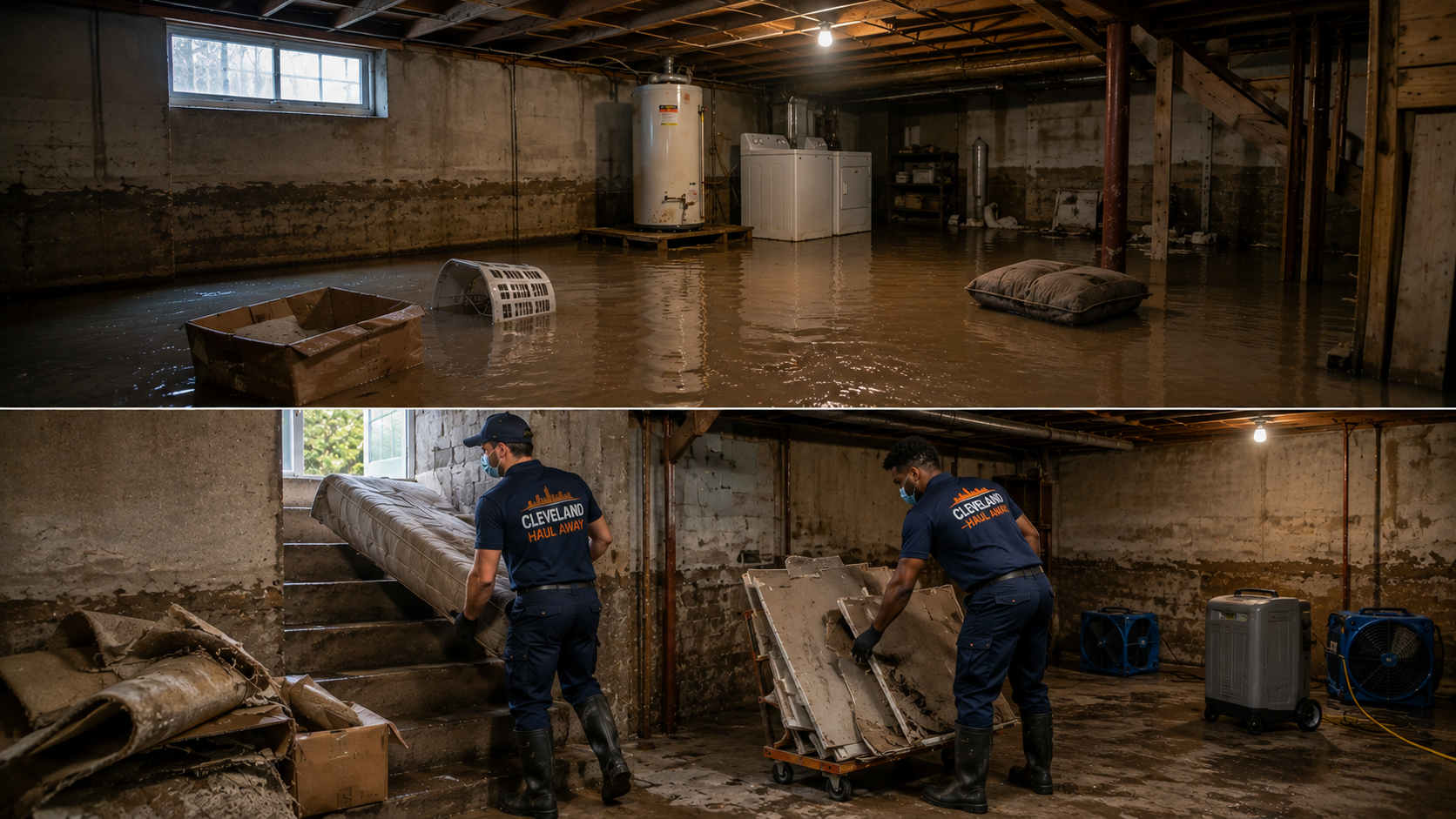
Removing soaked furniture, carpet, drywall, and insulation is heavy, wet, awkward work, and it usually adds up to more volume than one household can handle with a curbside pickup schedule. A cleanout crew handles it in one visit, carrying items out through the basement walkout or up the interior stairs, loading directly to a truck, and hauling everything to disposal or recycling. Wet drywall, soaked carpet pad, and ruined particleboard are heavy and go straight to disposal. Metal shelving and appliances are separated for scrap recycling. Any items the family wants to try to save are set aside before hauling starts.
Basement flooded? Get soaked contents out today.
Call (216) 493-0555Dry, Dehumidify, and Prevent Mold
Once contents are out and standing water is extracted, the remaining structure needs to dry aggressively. Mold can start growing in wet basement conditions within 24 to 48 hours, so this step is a race against the clock. Run box fans and a commercial-grade dehumidifier continuously for several days, open windows and interior doors to move air, and monitor humidity levels until they return to normal. Any drywall that stayed wet should be cut back 12 to 18 inches above the water line and removed, since moisture wicks up gypsum board faster than most homeowners realize.
Cost of Flooded Basement Cleanout in Cleveland
Cleanout pricing depends on how much of the basement contents need to leave and how much damaged building material comes out with them. These ranges cover the haul-away portion only, not water extraction, mold remediation, or drywall repair, which are separate specialist services.
| Scope | Typical Range |
|---|---|
| Partial basement, minimal contents damage | $400 to $800 |
| Full basement, furniture and carpet damaged | $1,200 to $2,500 |
| Full basement gut with contents and damaged drywall | $2,500 to $5,000 |
Prices include labor, loading, hauling, and responsible disposal or recycling. Confirmed on-site before work begins.
When to Call a Professional Cleanout Crew
DIY makes sense for a small clean-water flood with a few damaged items. Bring in a professional cleanout crew when the flood covers most or all of the basement floor, when soaked contents include heavy furniture, appliances, or wall-to-wall carpet, when there's a hard timeline like an insurance deadline or a mold-prevention window, or when the volume of damaged material is more than a homeowner can physically move alone. Cleanout is separate from water extraction and mold remediation, but a good crew can coordinate the removal side of things quickly so the drying and repair work can start on schedule.
Frequently Asked Questions
Is it safe to enter a flooded basement in Cleveland?
Not until power is shut off at the main breaker and the water type is identified. Standing water in a basement with live electricity is a serious shock hazard, and sewer backup water is a health hazard.
How much does flooded basement cleanout cost in Cleveland?
Flooded basement cleanout in Cleveland typically ranges from $400 for a partial basement with minimal damage to $5,000 or more for a full basement gut with contents.
What items can be saved after basement flooding?
Solid wood furniture, metal items, glass, and dishware can usually be cleaned and saved. Upholstered furniture, mattresses, particleboard, carpet, drywall, and insulation usually need to be removed if soaked.
How fast do I need to act to prevent mold?
Mold can start growing within 24 to 48 hours in wet basement conditions, so drying and removing soaked porous materials should begin as soon as it is safe to do so.
Does homeowners insurance cover basement flood cleanup?
Coverage depends on the source. Sudden pipe bursts or appliance failures are often covered, while groundwater and sewer backup usually require separate flood or sewer backup endorsements.
Can you haul out wet drywall and soaked carpet?
Yes. Wet drywall, soaked carpet and padding, ruined furniture, and damaged insulation are all handled as part of a flooded basement cleanout.
Related Services
Basement Flood Cleanout, Same-Day Availability
Speak with a real person, get a firm price on the spot. No obligation.