What Attracts Rats and Mice to Philadelphia Homes?
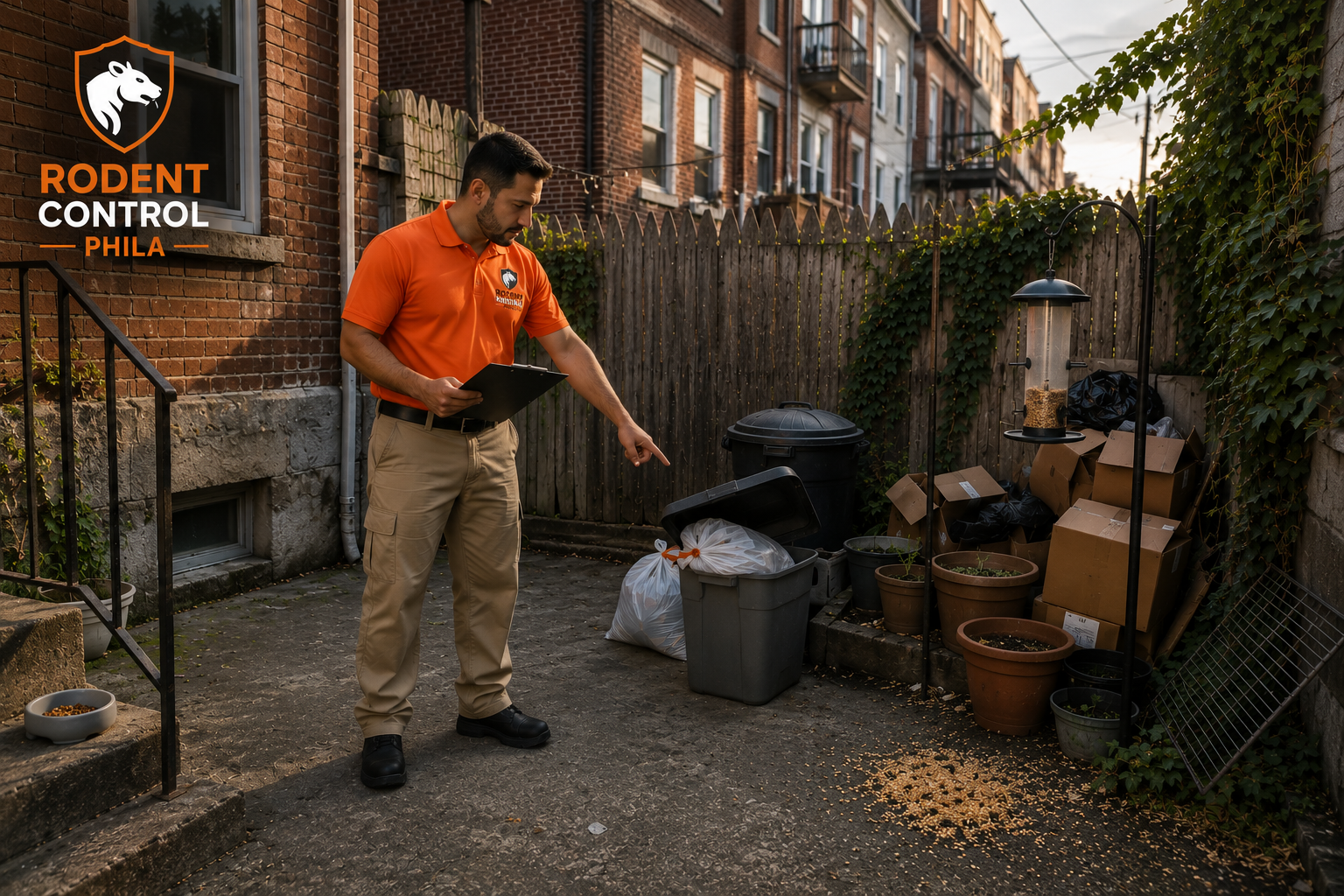
Rats and mice come to a Philadelphia home for three things: food, water, and shelter. The specific attractants that pull them in most reliably are unsecured trash in rear alleys, pet food left out overnight, cluttered yards and sheds that give burrow cover, standing water in basements or yards, and gaps in the foundation that let them reach any of the above. Removing these attractants (or making them inaccessible) does more for long-term prevention than trapping ever will.
Rodents do not appear randomly. They arrive at a property because it offers something a neighboring property does not: an easier meal, a quieter nesting spot, or an easier way in. Almost every rodent problem in Philadelphia can be traced to one or more specific attractants, and removing them changes the equation faster than any trap. Here is the list, ranked roughly by how often each one shows up in our Philadelphia service calls, with a specific one-line fix for each.
The top attractants pulling rats and mice into Philadelphia homes
1. Unsecured trash in rear alleys and side yards
By far the number one Philadelphia attractant. Standard plastic trash bags in shared alleys, overflowing bins, and bags left out overnight before pickup all provide a reliable food source that supports the whole block's rodent population.
Fix: Use hard-sided bins with tight-fitting lids. Put trash out the morning of pickup, not the night before.2. Pet food left out overnight
Dry dog or cat food in an open bowl overnight is a mouse magnet, particularly in basements, kitchens, and back porches. Bird seed in outdoor feeders also feeds mice and rats after dark.
Fix: Pick up pet bowls at night. Store dry pet food in sealed metal or hard-plastic containers, not bags.3. Food in open pantry packaging
Cereal, flour, rice, pasta, chips, and cookies stored in original paper or thin plastic packaging are easy for mice to reach. A single tear in a package overnight is enough to start an infestation.
Fix: Move dry pantry goods into sealed glass or hard-plastic containers. Inspect packaging weekly for gnaw marks.4. Cluttered yards, sheds, and basements
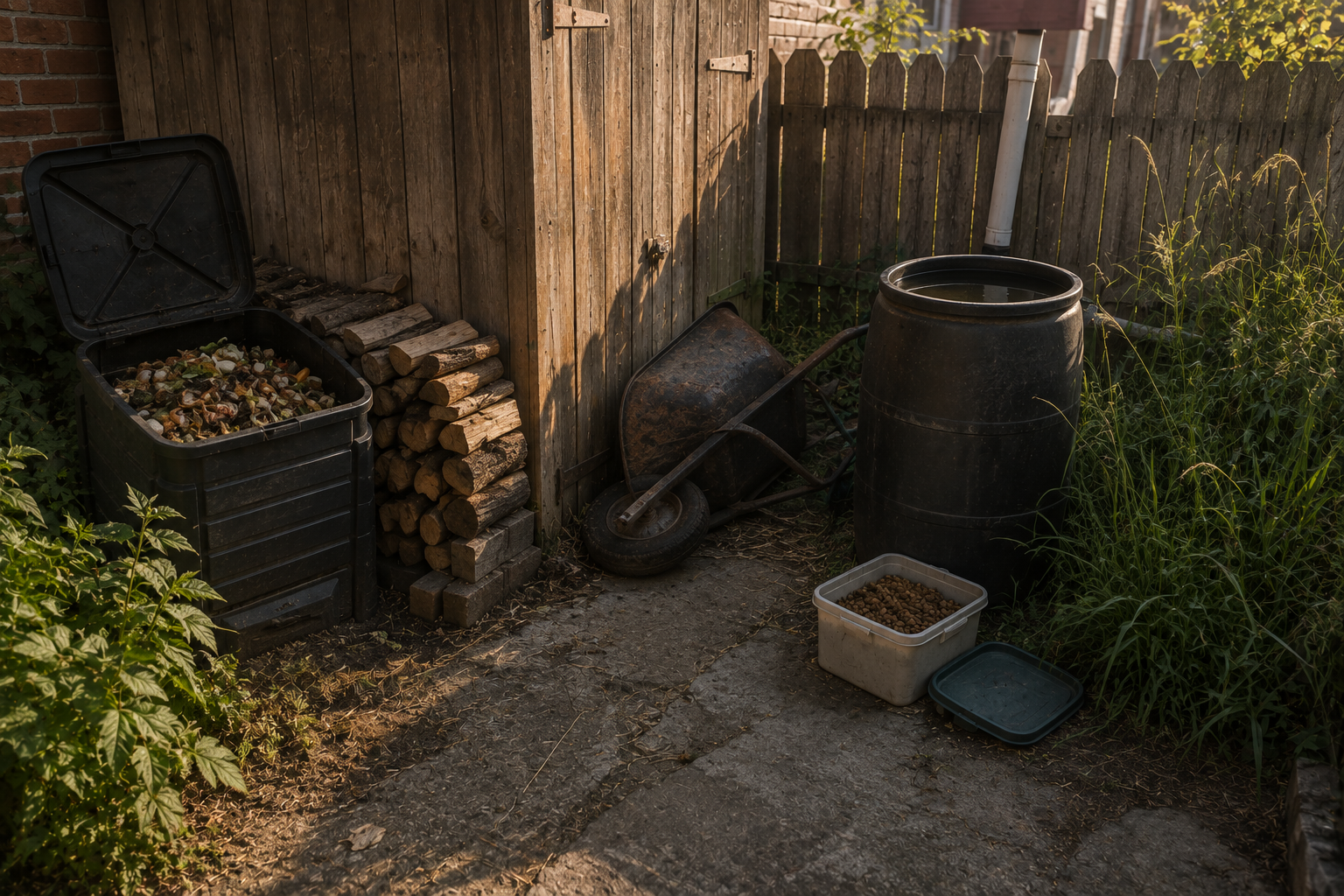
Stacked lumber, cardboard boxes, unused planters, old furniture, and yard debris create protected burrow sites and nesting cover. Rats specifically prefer to travel under continuous cover rather than crossing open ground.
Fix: Clear clutter along fence lines and foundation walls. Store items on shelves at least six inches off the ground and away from walls.5. Standing water in basements, yards, or planters
Rats especially need daily water access. A wet basement, uncovered rain barrel, clogged gutter, or standing puddle behind a shed will hold rodents on your property even if the food source is next door.
Fix: Fix basement moisture issues, cover rain barrels, clear gutters seasonally, and grade yards to drain away from the foundation.6. Compost bins without rodent-proof design
Open-top compost bins and simple wire compost setups are effectively a rodent buffet. Food scraps buried in an unenclosed pile attract rats within days.
Fix: Use a fully enclosed tumbler-style compost bin with 1/4-inch mesh ventilation. Skip meat, dairy, and cooked food scraps.7. Bird feeders and dropped seed
Even the neatest bird feeder drops seed on the ground, and that seed feeds mice and rats overnight. Ground-feeding setups (open trays or scattered seed) are worse.
Fix: Use a hanging feeder with a seed-catching tray. Sweep up ground seed daily during peak seasons. Consider removing feeders entirely if active rodent pressure exists on your block.8. Overgrown vegetation touching the house
Ivy, tall grass, and shrubs that touch the foundation or reach up to windows and rooflines give mice and rats direct access to entry points and cover to move under.
Fix: Trim vegetation back at least 12 inches from the house. Keep tree branches from touching the roof or siding.9. Grease buildup around exterior kitchen vents and grill areas
Grease that accumulates on siding under an exterior kitchen vent, or around the base of an outdoor grill, is a strong scent attractant even after the source is turned off.
Fix: Wipe exterior kitchen vent surrounds seasonally. Clean grill exteriors and covered storage areas after each use.10. Neighboring vacant lots, active construction, or unmaintained properties
This one is not on your property, but it drives most Philadelphia rodent pressure. A vacant lot, an under-renovation rowhome, or an unmaintained neighboring yard supports a rodent population that then travels onto adjacent properties looking for food and shelter.
Fix: Cannot remove the source directly. File a 311 report against the vacant or unmaintained property to trigger a Philadelphia Department of Public Health inspection. On your side, focus on exclusion so rodents cannot cross onto your property.11. Foundation and basement gaps large enough to enter
Not a food attractant, but every attractant above only becomes a problem if rodents can actually reach it. Any unsealed opening larger than a quarter inch in the foundation, basement, or exterior walls is a working entry point.
Fix: Seal gaps with materials rodents cannot chew (galvanized mesh, mortar, sheet metal). Full walkthrough in our rodent-proof your basement guide.12. Fireplaces and chimneys without proper caps
An uncapped chimney is a direct route into the house from the roof. Rats and larger rodents (as well as squirrels and birds) use them frequently in older Philadelphia rowhomes.
Fix: Install a stainless steel chimney cap with 1/4-inch mesh. Inspect annually for damage.
Which attractants matter most for rats vs mice
Not every attractant pulls both species equally. Rats need daily water and prefer continuous cover for travel, so standing water, cluttered yards, and adjacency to vacant lots matter more. Mice need less water (they get most of it from food), are smaller, and can survive on much less continuous shelter, so open food and small entry gaps matter more. If you know whether you are dealing with mice or rats, prioritize the attractants that species uses most. Our mice control and rat control service pages break the treatment differences down further.
Why removing attractants matters more than trapping
Trapping removes the rodents currently on your property. Removing attractants changes whether new rodents want to come at all. In a Philadelphia rowhome, where the block has a continuous baseline rodent population thanks to shared alleys and neighbor conditions, trapping alone reduces activity temporarily and attractants keep drawing new arrivals. Trapping plus attractant removal plus professional exclusion is the combination that holds long-term, which is why our full rodent control process covers all three.
Remove the attraction and close the gaps
Free inspection identifies the specific attractants and entry points on your property.
Call (267) 501-1576 Or request your free rodent inspection onlineFrequently asked questions
What is the number one thing that attracts mice to a house?+
Accessible food. In most Philadelphia homes, that means dry pantry goods in original packaging, pet food left out overnight, or crumbs in kitchens that are not cleaned before bed. Removing the food source cuts mouse motivation to enter or stay significantly, but works best combined with sealing the entry points they use.
Does having a clean house prevent mice completely?+
It helps significantly but does not guarantee immunity. Even a spotless house can get mice if the block has heavy rodent pressure and the property has unsealed entry gaps. Cleanliness is one of three factors: food access, entry points, and neighborhood pressure. Address all three for reliable prevention.
Do peppermint oil or other natural repellents actually work?+
Not reliably. Independent testing has not shown consistent evidence that peppermint oil, mothballs, or ultrasonic devices repel active rodent populations. The scent may briefly deter first exploration, but hungry rodents habituate quickly. Focus effort on removing attractants and sealing entry points instead.
If I remove all the attractants, will mice go away on their own?+
For a small, new mouse problem, sometimes yes. Established mice with a nest inside a wall usually will not leave voluntarily even with food removed, since they can survive on very little and shelter is what they came for. Removing attractants combined with trapping and sealing entry points is what actually resolves an established problem.
Are bird feeders really that bad for rodent prevention?+
In blocks with active rat or mouse pressure, yes. Dropped seed on the ground feeds rodents overnight, and even hanging feeders drop enough to matter. If you have an ongoing rodent problem, removing bird feeders is one of the higher-impact fast fixes.
This guide describes the most common rodent attractants for Philadelphia homes and one-line fixes for each. Every property is different. Call (267) 501-1576 for a free inspection that identifies the specific attractants and entry points at your address.